
Original article written by Derek Fleming and published on the Sun Gazette on December 11, 2024 9:00am
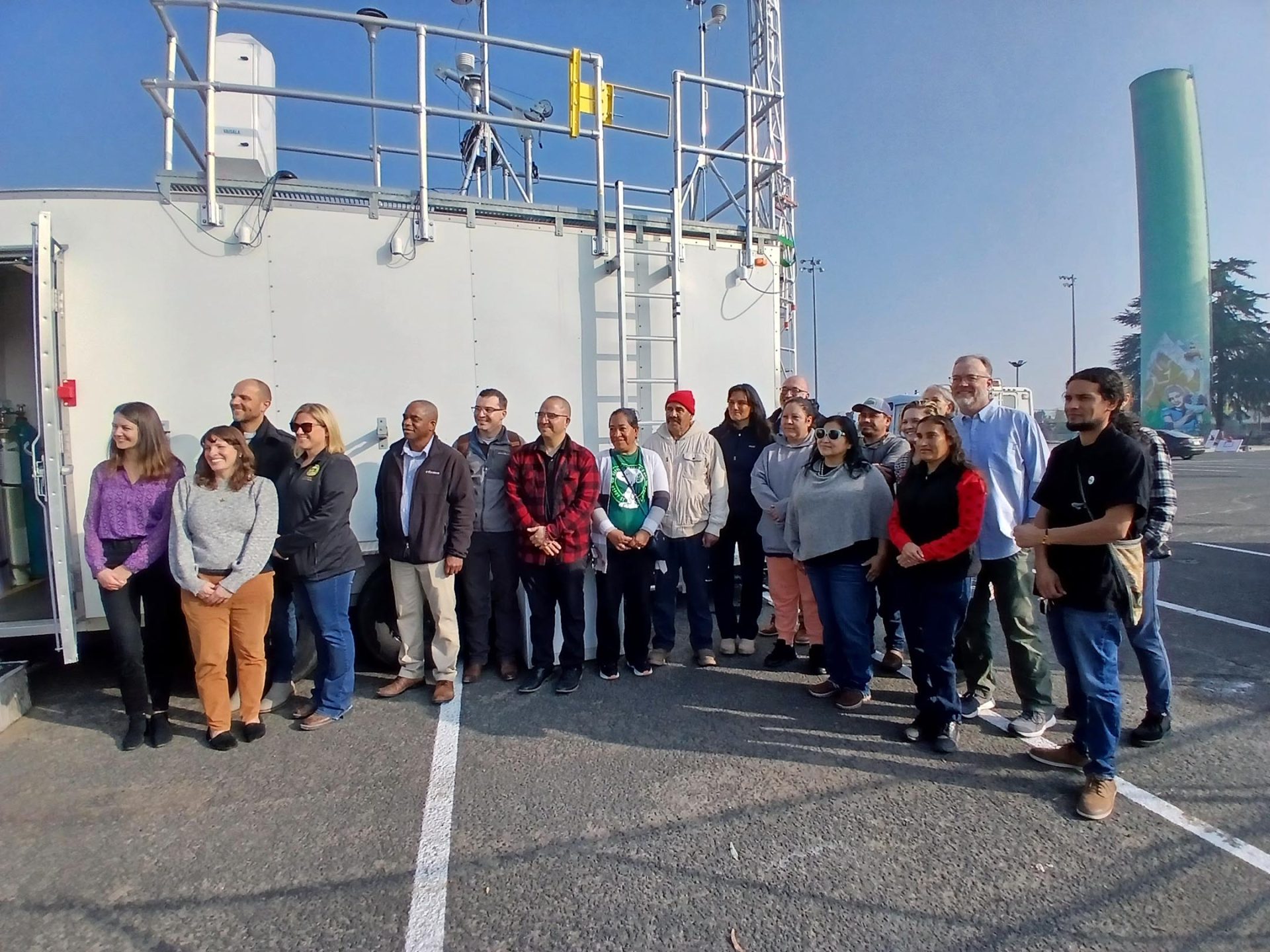
In a collaborative effort, federal, state and local groups brought an air quality monitoring tool to the town of Poplar to help researchers identify types of pollution in the area. Only one other monitor of this type exists in Oregon and is primarily used for monitoring air pollution caused by wildfires.(Derek Fleming)
Tool to help researchers identify and monitor types of pollutants and their potential sources debuts in community of Poplar
POPLAR – A new air quality monitoring tool that is intended to capture data that has never been available before has been unveiled in Poplar, a rural farming community in Tulare County.
The tool is a project that was developed in collaboration with federal, state and local authorities along with community members. It uses sophisticated gathering and monitoring equipment that has never been used in California before to help researchers identify the types of pollutants and possible sources. Only one other monitor of this type exists in Oregon, and is primarily used for monitoring air pollution caused by wildfires.
“This project was made possible by the work done by Central California Environmental Justice Network to really understand how air quality impacts our health, especially here in our very rural farmworker communities,” Central Valley Empowerment Alliance Executive Director Arturo Rodriguez said. “This is a state-of-the-art way of using methodologies to collect data. I believe that the results will help us shape policy in a way that will make life better.”
The tool uses numerous monitors that collect air and streamlines it to sophisticated computers that analyze the pollutants in real-time. The tool can measure dozens of types of pollutants including smoke, dirt and various gases like methane. The tool can also monitor for metals in the air and can help to pinpoint the source of the pollution.
While the monitoring station is designed to be portable, it takes a considerable amount of time to set up and take down before it can be transported. It takes about one week to set up and calibrate the monitoring station. The station cost several million to develop, though an exact cost was not available. It also costs between $100,000 and $300,000 per month to operate. Funding was generated by using American Rescue Plan Act (ARPA) grants.
“Good science is not cheap but it is incredibly valuable to understand air quality,” one of the contractors involved in the project explained.
The location in Poplar was selected because it offers an ideal area to generate data on air pollution that farmworkers are exposed to while also providing a safe location and convenient access to power.
Martha Guzman, the regional administrator for the U.S. Environmental Protection Agency, said the collaboration involved to bring the monitoring facility online is the start of a longer term project to collect data and use that data to improve air quality.
“‘Cesar Chavez once said, ‘Once you have the knowledge, there is no going back,’ so we are going to have facts that will come out of this science that are going to lead us to change,” Guzman said. “What is that change? We don’t know yet because we still have a lot of work to do, but there is nothing that is going to take that science away from us.”